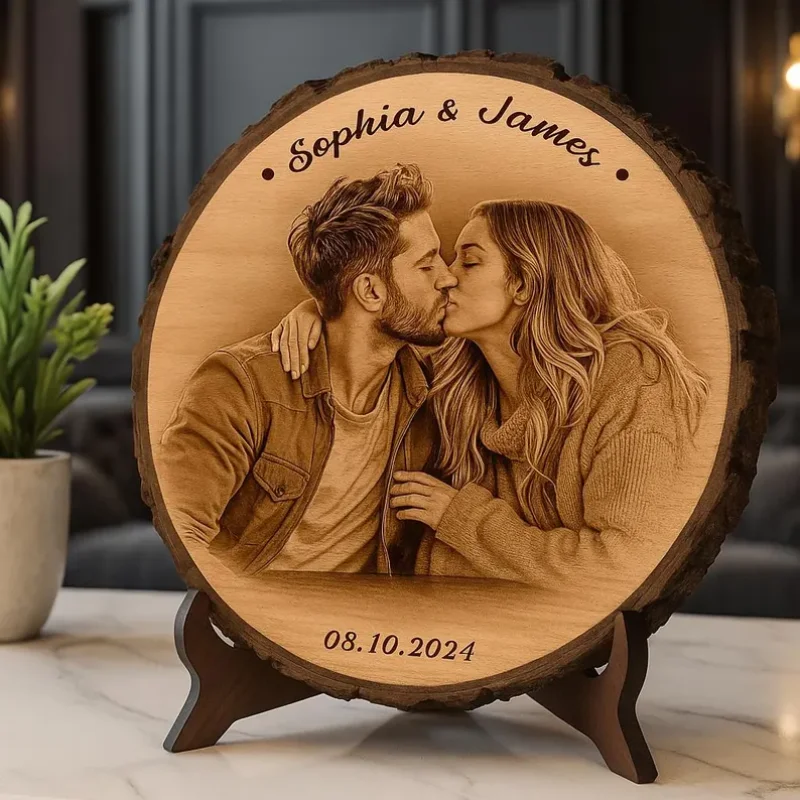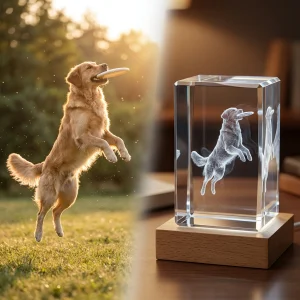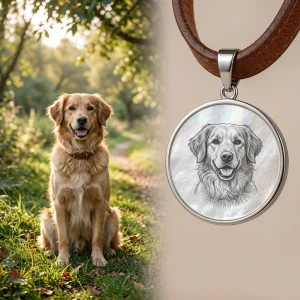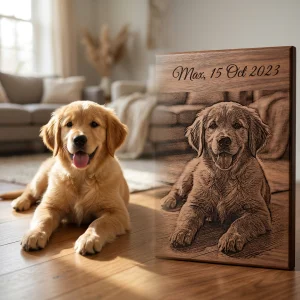
Custom Laser-Engraved Wooden Keepsakes for New Puppy Adoption Day
Bring a 10-week-old puppy home, and chaos follows immediately. Teething starts. Leashes pile up on the counter. Custom wall-mounted leash hangers and growth charts clean up the mess while capturing early puppyhood details before your dog doubles in size.
Material choice directly controls how cleanly your laser cuts and engraves. Hard Maple (Janka hardness 1,450 lbf) offers a pale, tight-grained surface. Contrast is exceptionally high on maple because burnt lignin turns dark charcoal against creamy wood. American Walnut (Janka hardness 1,010 lbf) delivers a rich, dark background. Performing walnut laser engraving creates a chocolate-to-black burn with natural gold undertones. It holds sharp vector line art for typography without splintering along grain lines.
Avoid red oak. Large, open pores create deep ridges that interrupt fine laser passes. Text breaks up inside earlywood channels, rendering tiny dates or birth weights unreadable.
Technical Specifications for 50W CO2 Laser Engraving
Achieving clean depth on laser engraved wooden keepsakes requires precise power and focal management. A standard 50-watt CO2 glass tube laser working with a 2.0-inch focal lens creates a beam spot size of roughly 0.005 inches (0.127 mm).
Rastering text and line art onto walnut requires high speed and moderate power to char the surface without deep thermal bleeding. Set your laser to 350 mm/s at 18% to 22% power. Run your line density at 300 to 400 lines per inch (LPI). A higher LPI setting generates excessive heat, causing halo burning along letter edges.
Vector cutting hardware mounting holes or leash hook slots demands different settings. Drop speed to 15 mm/s and push power to 65%. Run air assist at 30 PSI minimum. High air pressure clears smoke instantly from the cut kerf, preventing sticky creosote residue from settling on the face of your workpiece.
Wood Species & Laser Parameter Comparison
| Wood Species | Janka Hardness | 50W CO2 Raster Speed / Power | Line Density (LPI) | Optimal Artwork Type |
|---|---|---|---|---|
| Solid American Walnut | 1,010 lbf | 350 mm/s @ 20% power | 300 LPI | Bold typography, outline art |
| Hard Maple | 1,450 lbf | 300 mm/s @ 24% power | 400 LPI | Photo rasters, fine line details |
| Black Cherry | 950 lbf | 380 mm/s @ 18% power | 350 LPI | Silhouettes, customized dates |
| Baltic Birch Plywood (B/BB) | 600 lbf | 400 mm/s @ 15% power | 300 LPI | Layered name signs, growth charts |
Preparing Artwork: Vector Typography and Stucki Dithering
Dog names and adoption coordinates need clean vector geometry. Convert all font paths to filled outlines before sending files to LightBurn or LaserGRBL. Offset vector text by 0.1 mm inward if you plan to inlay epoxy resin or contrasting wood powder into the burnt void.
Engraving photos of puppy fur is notoriously tricky. Wood doesn't produce native greyscale shades. It either burns or stays raw. You must dither the digital image.
Skip standard Floyd-Steinberg algorithms for wood. They create random clusters that burn into dark, muddy blobs on natural grain. Use the Stucki dithering algorithm instead. Stucki calculates error diffusion across a broader 5x5 pixel matrix. It creates clear space between micro-dots, allowing individual guard hairs and whisker highlights to remain distinct on hard maple and walnut surfaces. Crop your puppy photograph tight around the eyes and nose. Boost image contrast by 25% and sharpen mid-tones before applying the Stucki filter at 300 DPI.
Pet-Safe Finishes and Daily Durability
Freshly burnt wood off-gasses microscopic ash. Open pores absorb skin oils fast. Unfinished wooden keepsakes collect dirt from mud-soaked leashes within weeks.
Avoid polyurethane or lacquer on items your dog might touch. Synthetic coatings release volatile organic compounds during curing and shatter if scraped by brass leash hardware.
- Raw Linseed Oil: Penetrates deep into walnut fibers over 48 hours. Contains zero metallic driers. Safe for homes with pets.
- Food-Grade Mineral Oil & Beeswax: Creates a soft, satin sheen. Excellent water resistance for leash hangers mounted near entryway doors.
- Carnuba Wax: Provides a harder top coat over linseed oil to resist fingernail scratches around hook mountings.
Wipe oil liberally across the engraving. Let it sink in for 20 minutes, then buff vigorously with a lint-free cotton cloth. The oil darkens laser-charred grooves, increasing visual contrast while repelling water drops from damp dog gear. Reapply a light beeswax coat twice a year.
Limitations, Material Warnings, and Chew Risks
Wood crafts have physical boundaries. Softwoods like Southern Yellow Pine or Western Red Cedar must be avoided entirely. Pine contains heavy sap pockets. Under laser heat, resin boils to the surface, forming sticky amber pools that obscure engraved lettering and foul mirror optics.
Teething puppies chew everything within reach. A walnut growth chart or treat box resting on a low side table becomes an easy chew toy. Dried walnut wood isn't inherently toxic to dogs in small amounts, but sharp splinters cause internal puncture hazards if ingested.
Mount all leash hangers and growth charts securely to wall studs using keyhole slots or heavy brass screws. Minimum mounting height for leash racks should be 54 inches from the floor. Keep personalized wooden treat boxes on countertops higher than 36 inches. Never leave raw, unsealed wood inside a dog crate or within reach of a puppy under 18 months old.
What wood species works best for detailed photo engravings of puppy fur?
Hard Maple works best for photo engravings. Its dense, light-colored surface provides high contrast against black burnt dots. The fine, uniform grain structure prevents Stucki dithered dot patterns from bleeding together, preserving individual fur textures and highlights.
Are laser-engraved wooden keepsakes safe to keep near dogs?
Yes, provided they are finished with non-toxic oils like pure linseed or food-grade mineral oil and mounted out of reach. Avoid synthetic lacquers or chemical stains. Keep all wooden items installed above the puppy's chew height to eliminate splintering risks.
How do I clean mud and water off a laser-engraved wooden leash hanger?
Wipe the surface with a dry or slightly damp microfiber cloth immediately after hanging wet gear. Avoid harsh chemical cleaners or abrasive scrubbers. Reapply a thin layer of natural beeswax polish every six months to maintain water resistance across the laser-etched lines.