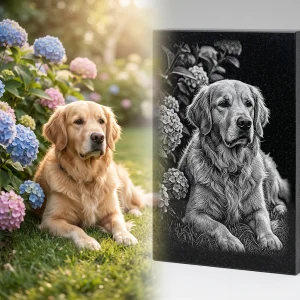
Crafting an Enduring Laser Engraved Pet Memorial Stone
Nathan stood under the old white oak in his backyard, staring at a patch of worn turf. Buster, his 13-year-old rescue golden retriever, used to sleep right there in the mid-afternoon sun. Three months after Buster passed, Nathan bought a resin garden plaque online. Rain stripped the bronze paint off within weeks. Winter frost cracked the cheap plastic base right down the middle.
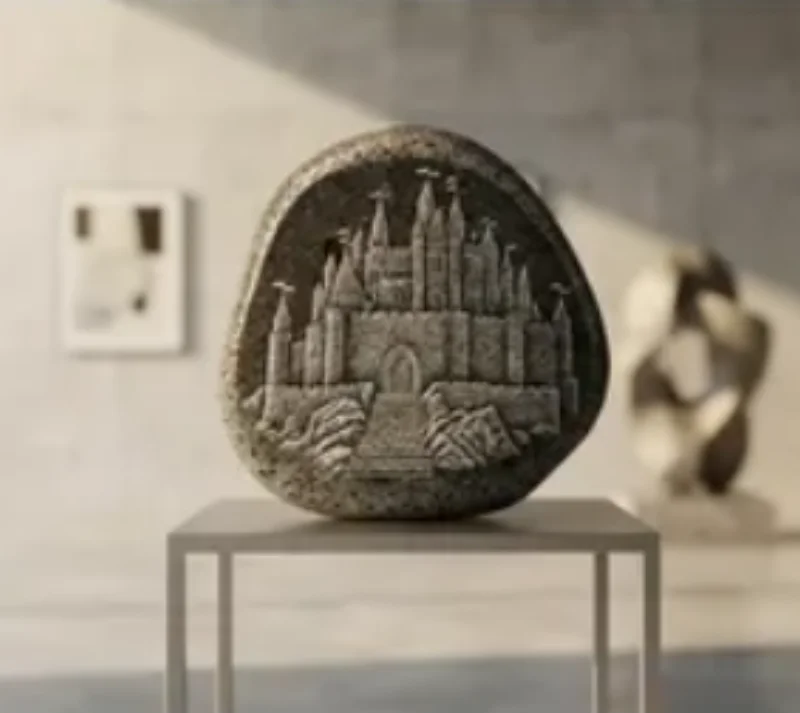
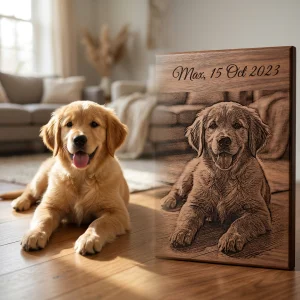
He wanted something permanent. A real stone to mark the spot, with Buster’s floppy-eared photo etched directly into the mineral surface. He turned to his CO2 laser engraver, determined to build a custom dog memory stone that could survive rain, snow, and direct sunlight without fading.
Choosing Stone Substrates That Withstand the Elements
Not every stone handles outdoor exposure. Nathan learned this after testing three local rock types in his workshop.
Porous sandstone fails quickly in freezing climates. Water seeps into sandstone's open microscopic pores. When temperatures drop below 32 degrees Fahrenheit, that trapped water expands, blowing the outer face off the stone in flakes.
For a durable laser engraved pet memorial stone, dense substrates are mandatory. Nathan selected two distinct options:
- Absolute Black Granite: Polished granite slab at least 0.75 to 1.5 inches thick. Its fine grain holds photo details cleanly.
- Smooth River Rocks: Naturally tumbled basalt or dark river stones. Minimum 2 inches thick to prevent structural cracking under lawn mower wheels or heavy snowfall.
Laser Technical Parameters for Crisp Portraits
Laser engraving on stone relies on thermal shock. The beam vaporizes trace amounts of moisture inside the rock structure, popping off tiny surface chips to expose a lighter inner layer.
Nathan imported a high-contrast photo of Buster panting in the grass. He opened his software and configured his 40W CO2 laser using exact specs:
- Laser Wattage: 30W to 40W CO2 laser tube. High wattage units like 80W work, but require lower power percentages—around 10%—to prevent melting the stone into glass.
- DPI Setting: 300 to 600 DPI. Setting the resolution higher than 600 DPI causes micro-fractures to overlap, destroying detail and turning image highlights into muddy gray patches.
- Dithering Algorithm: Jarvis or Stucki dithering mode. These algorithms convert grayscales into evenly spaced dot patterns that translate accurately onto non-porous rock.
- Speed & Power: On his 40W unit, Nathan ran 350 mm/s at 18% power. Light, fast passes produce bright white micro-fractures without deep cratering.
Creating Contrast and Weatherproofing the Surface
Polished black granite offers natural contrast. When hit by the CO2 beam, dark polished stone fractures into stark white powder dots. No acrylic fillers, spray paint, or gold leaf paste required. Fillers crumble after a few seasons of rain, while pure laser-fractured stone retains contrast for decades.
After wiping the stone dust off Buster's portrait with a microfiber cloth, Nathan applied a protective coat. Unsealed micro-fractures trap dirt and algae over time, darkening the image.
He sprayed a thin coat of silane-siloxane penetrating masonry sealer across the face. Silane-siloxane bonds chemically within the stone pores without leaving a shiny plastic film that turns yellow under UV rays. Water beads up instantly, washing dirt right off the image without washing away the detail.
Nathan placed the finished stone back under the oak tree. The heavy dark rock sat firmly in the soil. Buster’s image shone crisp and bright against the polished granite face, ready for summer heat and winter ice.
Can a laser engraved pet memorial stone stay outside all year?
Yes, provided you choose dense, non-porous materials like polished absolute black granite or solid river rock with a minimum thickness of 0.75 inches. Applying a penetrating silane-siloxane sealer protects the laser-etched micro-fractures from dirt, algae, and freeze-thaw cycle spalling.
What is the best laser setting for photo dithering on black granite?
For a standard 30-40W CO2 laser, run between 300 and 400 DPI using either Jarvis or Stucki photo dithering. Keep power low—around 15% to 22%—and speed moderate (300 to 400 mm/s) to fracture the stone surface into white dots without overheating or melting the rock.
Why should you avoid soft sandstone for outdoor rock keepsakes?
Sandstone is highly porous and absorbs rain quickly. In freezing conditions, water trapped inside the sandstone pores expands into ice, causing the surface layer and your laser engraving to flake, spall, and erode away within a couple of seasons.