Weatherproof Pet Memorials: How Ivy Built a Permanent Tribute for Buster
Ivy stood in her backyard holding three broken pieces of resin. Last November, after losing her senior rescue pup Buster, she bought a $25 stone lookalike online. Five months of Ohio frost, heavy snow, and sudden March thaws turned the marker into flaking trash. Water seeped into micro-cracks, froze during a sub-zero night, and snapped Buster’s picture down the middle.
She needed a real solution. She wanted a permanent marker for the garden corner under the oak tree where Buster used to nap. It had to survive July downpours and January blizzards without fading, peeling, or cracking.

Stone Selection: Granite, Slate, and Basalt Compared
Ivy researched raw materials first. Rocks react differently to weather. Porous stones like sandstone absorb up to 8% of their weight in water. When winter hits, trapped moisture expands by 9% as it turns to ice. That internal pressure shatters unsealed stone from the inside out.
She evaluated three durable materials commonly used for custom pet memorial stones:
- Absolute Black Granite: The top choice for harsh climates. Granite has a water absorption rate under 0.05%. Its tight crystalline structure blocks moisture completely. When micro-fractured by a laser, polished black granite yields striking white contrast.
- Natural Slate: Dark charcoal tones with a smooth, layered texture. Slate split along natural planes creates flat slabs between 0.3 and 0.5 inches thick. It holds detailed line art well. Unsealed slate edges can delaminate over decades if water collects between the layers.
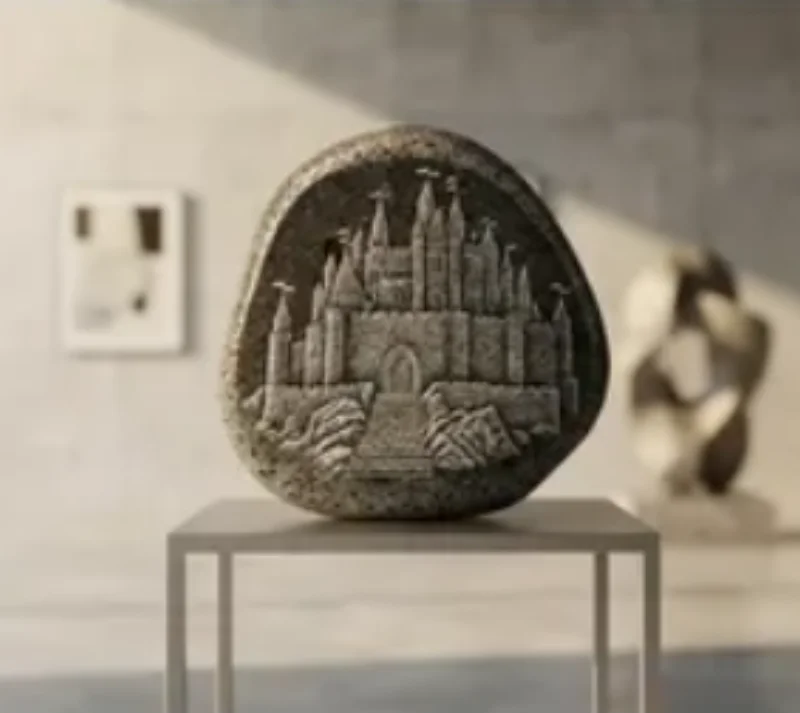
- Smooth River Basalt: Dense volcanic rock naturally rounded by water flow. Basalt markers offer heavy, organic shapes that blend into garden borders. They resist frost well and provide a dark canvas for laser work.
Ivy picked absolute black granite for Buster’s spot. She wanted high contrast for his face and total protection against winter freeze-thaw cycles.
Preparing Photos for Stone Engraving
Laser machines don't paint stone. They micro-fracture it. A focused beam hits the stone, heating quartz and feldspar crystals instantly until they vaporize. That reaction leaves behind tiny light-colored pits. The machine can't print true shades of gray. It only chips a white dot or leaves dark stone alone.
Ivy uploaded a favorite photo of Buster to the custom layout tool. The production team prepped the image using four steps before sending it to the laser:
- Resolution scaling: The source photo must hit 300 DPI at actual output size. Low-resolution images turn pixelated on stone.
- Background removal: Clearing out grass and fence lines isolates the pet's outline against the black background.
- Tone adjustment: Midtone contrast is bumped by 15% to 20%. Shadows are lifted so dark fur detail doesn't disappear.
- Dithering: Converting grayscale images using Stucki or Jarvis dithering algorithms translates smooth shades into calculated dot grids.

Technical Laser Parameters for Permanent Etching
Etching outdoor pet grave markers requires exact laser calibration. Weak settings leave faint marks that fade outdoors. Excessive power melts tiny stone details together into a blurry blotch.
Workshops run specific technical ranges based on material density:
Engravers use 40W to 60W CO2 laser tubes for granite work. They set the raster resolution between 300 and 600 DPI. Pushing resolution past 600 DPI overlaps laser passes, causing excessive heat that chips the surface unevenly.
For black granite, a standard job runs at 45W power and 350 mm/s raster speed. Slate requires lower power around 30W to prevent surface flaking. Engravers use a 1.5-inch focal length lens to produce a ultra-fine 0.003-inch spot size, capturing individual fur strands in the portrait.
Contrast Boosts and Sealing Against Weather
Fresh laser etching looks bright white when dry. Rain changes things. When water fills the microscopic pits of unsealed granite, light stops scattering. The engraved picture temporarily darkens until the stone dries out.
Ivy wanted Buster's face clear during rainstorms. The engraver used a two-part finish:
First, they filled the etched lines with exterior-grade white acrylic litho ink. This paint locks in sharp contrast regardless of surface moisture. Second, after curing for 24 hours, they applied a penetrating silane-siloxane masonry sealer over the entire block. Standard clear spray paints yellow and peel under direct sun. Silane-siloxane forms a chemical bond inside the stone pores. Water beads off the surface while allowing internal moisture vapor to escape.
Setting Up a Lasting Backyard Memorial
Ivy received the finished granite marker four days later. Buster's grin was sharp against the dark stone. Installing outdoor pet grave markers correctly keeps them from sinking, tilting, or getting damaged by lawnmowers.
- Dig the base: Create a flat hole 4 inches deep and 2 inches wider than your block.
- Add drainage: Pour 2 inches of pea gravel into the bottom to stop water from standing underneath.
- Add sand: Pack 1 inch of sharp builder sand over the gravel for a level base.
- Set the stone: Position the marker flush with the surrounding grass line so mower blades clear it easily.
Care is minimal. Clean the surface twice a year using mild soap, water, and a soft nylon brush. Avoid harsh acid cleaners or wire brushes. Reapply a light coat of penetrating silane-siloxane sealer every three years to maintain maximum water repellency.
What is the most weather-resistant stone for outdoor pet memorial markers?
Absolute black granite is the most durable choice. It has a water absorption rate under 0.05%, which prevents water penetration and freeze-thaw cracking during freezing winters. Unlike porous sandstone or limestone, granite maintains its structural integrity outdoors for decades.
Why does an engraved photo on stone seem to disappear when it rains?
Laser engraving creates light contrast by micro-fracturing the dark surface into tiny, rough pits that reflect light. When rainwater coats the stone, it fills those rough cavities, changing light refraction and temporarily hiding the image. Applying exterior white litho ink and a penetrating silane-siloxane sealer prevents water from darkening the design.
Can I engrave any dog or cat photo onto a stone marker?
You can engrave most photos if they meet basic quality standards. High-resolution images (at least 300 DPI) with clear lighting work best. Photos with heavy shadows or blurry details need manual contrast adjustments and dithering conversion before engraving to ensure fur details translate cleanly onto dark stone.