The Science of Micro-Fracturing: How Lasers Mark Natural Stone
Thermal Physics of the 10.6-Micrometer Wavelength
CO2 lasers operate at a far-infrared wavelength of 10.6 micrometers (10,600 nanometers). This specific wavelength matches the natural molecular absorption bands of silicate minerals found in rock. Quartz, feldspar, and mica absorb this light energy almost instantaneously.
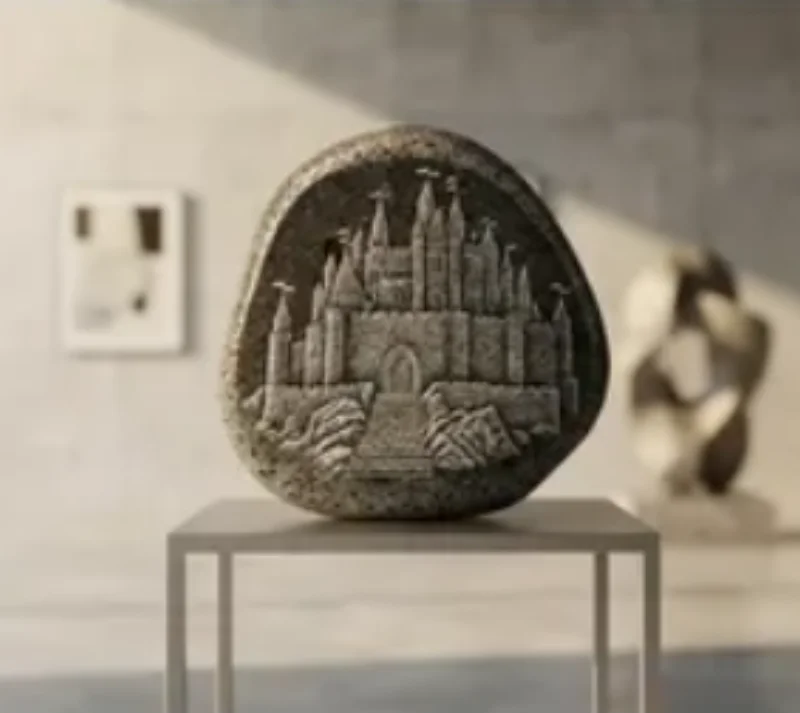
When the beam strikes dark granite or slate, it doesn't melt the substrate. Melting granite requires sustained temperatures above 1,200°C, which produces messy, glass-like slag. Vaporizing it takes over 3,000°C. Process techniques like laser marking natural stone bypass melting and vaporization entirely through localized micro-fracturing.
The laser pulse lasts microseconds. Heat spikes in a tiny zone roughly 100 microns wide. Stone is a poor thermal conductor, so heat cannot dissipate into surrounding material. Rapid heating creates extreme localized expansion stress that exceeds the tensile strength of mineral crystals. The surface snaps at a microscopic level. Small fragments crack and pop up, leaving shallow sub-surface fissures between 10 and 50 microns deep. Undamaged stone reflects light in one direction, while these millions of microscopic fractures scatter incoming light in every direction, creating a bright white visual mark on dark rock.
Comparing Mechanical Sandblasting and Laser Micro-Fracturing
Traditional stone carving relies on mechanical erosion. Technicians adhere a rubber stencil to polished rock, then blast it with aluminum oxide or silicon carbide grit at pressures between 60 and 80 PSI.
Sandblasting removes significant material. It cuts grooves from 0.5 millimeters to several centimeters deep. This process works well for large outdoor monuments that demand deep tactile relief. Fine text below 12-point font fails under this pressure because vinyl stencil bridges break apart.
Laser micro-fracturing creates virtually zero physical depth. Sub-surface cracking stays under 0.05 millimeters. High-frequency pulse control allows image resolutions up to 600 dots per inch (DPI). Fine lines, tiny lettering, and detailed photographic graphics transfer cleanly onto hard rock without physical contact or mask stencils.
Process Parameters for Stone Engraving
Excessive heat accumulation causes macro-cracking, breaking the stone along natural structural fault lines. Operators must balance wattage, raster speed, and pulse frequency to achieve maximum contrast without shattering the rock.
| Parameter | Target Spec (30W–60W CO2 Laser) | Physical Impact on Stone | Result of Incorrect Setting |
|---|---|---|---|
| Laser Wavelength | 10.6 µm | Couples directly with infrared absorption bands in silicates | Wavelengths near 1.06 µm pass through or reflect off polished rock |
| Power Density | 15–25 Watts (effective output) | Generates thermal shock in the top 20–50 µm layer | Excess power (>40W) melts stone into dark slag; low power (<10W) produces no contrast |
| Raster Speed | 300–500 mm/s | Limits laser dwell time to prevent heat bleed | Slow speeds cause deep structural cracking; high speeds leave faint marks |
| Pulse Frequency | 20–40 kHz | Controls micro-crack density per linear millimeter | Frequencies under 10 kHz create visible separate dots instead of smooth lines |
| Image Resolution | 254–300 DPI | Determines dot overlap for consistent light scattering | Setting above 400 DPI concentrates heat, cracking the underlying stone |
Substrates and Surface Optics
Successful granite laser engraving relies on the optical contrast between polished and fractured states. Fine-grain absolute black granite contains minimal quartz veining. When light hits the polished background, mirror-like specular reflection makes the stone look deep charcoal or black. Laser-fractured micro-dots scatter light diffusely, turning those spots bright white.
Slate behaves similarly due to its layered metamorphic origin. It breaks along natural cleavage planes under thermal impulse. Custom slate coasters utilize this physical property. A 40-watt laser running at 400 millimeters per second produces crisp, pale gray markings that stand out against the raw gray background.
Limitations, Thermal Shock, and Unsuitable Materials
Not all natural stones tolerate thermal micro-fracturing. Mineral compositions determine how rock reacts under laser energy.
Quartz content is a key limit. High-quartz materials like pure quartzite present severe thermal issues. Quartz undergoes an alpha-to-beta phase shift at 573°C, expanding instantly in volume. This sudden expansion causes spalling, where large chunks flake off randomly and ruin fine line detail.
Sedimentary stones present distinct structural challenges:
- Limestone and sandstone consist of loosely bound grains held together by calcium carbonate or clay. Laser heat crumbles the binder instead of fracturing clean mineral faces.
- Marble converts from calcium carbonate to calcium oxide (quicklime) under intense heat, leaving a dull, chalky mark that washes away in water.
- River stones retain moisture in tiny internal pores. Rapid heating turns that trapped water into steam, causing the rock to crack or burst under pressure.
Unsealed laser marks on functional stone items require special handling. Micro-fractures turn the surface porous. Spilling red wine, coffee, or cooking oil onto an unsealed slate coaster forces liquid directly into these microscopic cracks. Liquid fills the tiny air gaps, restoring optical clarity and making the white mark disappear until the stone dries out completely. Applying a light coat of food-safe sealer preserves visual contrast while blocking liquid penetration.
Why does laser engraving turn dark granite white instead of black?
Laser energy doesn't burn stone or deposit dye. It fractures the polished surface into millions of microscopic fragments. Polished granite reflects light directly away, looking dark. The fractured surface scatters light in all directions, making it appear white to your eyes.
Can light-colored marble be laser engraved with high contrast?
No. White or pale marble lacks the necessary optical contrast because fractured points match the surrounding background color. Laser marking natural stone requires dark polished rock so the light-scattering micro-fractures stand out.
Will laser marks on granite gifts wear off over time?
No. The mark alters the physical crystal structure of the rock itself. It isn't paint or chemical ink, so it won't peel, fade from ultraviolet sunlight, or wash away with household cleaners.
How do liquid spills affect custom laser-etched slate coasters?
Unsealed micro-fractures absorb liquid, temporarily filling the microscopic air gaps that scatter light. When wet, the white mark darkens and seems to vanish. Once the slate dries, the bright white contrast returns. Treating the surface with mineral oil stops liquid absorption.