The Geology of Laser Engraving: How Stone Mineralogy Dictates Power and Contrast
Standard CO2 laser tubes emit light at a wavelength of 10.6 microns. Stone surfaces do not burn like organic material. Instead, the focused light transfers localized thermal energy directly into the mineral matrix, causing controlled micro-fracturing or phase changes. Success depends on stone mineralogy laser engraving properties. Dark stones rich in fine-grained silicates and iron compounds absorb light rapidly. This micro-shatters the top silicate layer into microscopic dust particles, scattering light and turning dark rock crisp white.
Executing clean photo etching on stone requires strict parameter control. Setting power between 20W and 100W depends on rock hardness. Speeds usually range from 100mm/s to 500mm/s. High speed prevents excess heat from spreading across the substrate. Resolution settings should stay between 300 DPI and 600 DPI. Pushing past 600 DPI overlaps raster lines, generating excess heat that melts fine details into blurry grey patches.
Mineral Behavior Under the Beam
Stones react differently based on their crystalline structures and Mohs hardness ratings. Choosing the wrong stone type results in faint marks, thermal shock, or broken slabs.
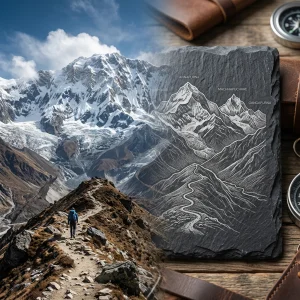
Dark Slate
Mohs hardness: 2.5 to 4. Slate consists of fine clay minerals, quartz, and muscovite mica aligned in thin metamorphic planes. It absorbs 10.6-micron laser radiation efficiently. A 30W CO2 beam running at 350mm/s pops off micro-flakes to leave a brilliant white mark against dark grey slate. It provides sharp image contrast for photo-realistic portraits on coasters or desk plaques.
Absolute Black Granite
Mohs hardness: 6 to 7. Composed of plagioclase feldspar, hornblende, and biotite with minimal free quartz. The dark matrix absorbs high thermal energy. Running at 25W power and 400mm/s at 300 DPI produces crisp white micro-cracks. This creates high-contrast greyscale tones suitable for etched memorial plaques and pet photo keepsakes.
Basalt
Mohs hardness: 6. Basalt is a dark, fine-grained volcanic rock rich in iron and magnesium. Heat from the beam melts the surface slightly before fracturing it, a process called vitrification. Settings around 40W and 250mm/s create clean off-white engravings with smooth edges.
Light Marble
Mohs hardness: 3. Marble is almost pure calcite (calcium carbonate). Under laser heat, calcite decomposes into quicklime (calcium oxide) and carbon dioxide gas without changing color dramatically. The laser carves smooth physical depth, but yields low optical contrast. Engravers often apply black acrylic paint fill inside the mark to make lettering visible on marble wine chillers or cheese boards.
Sandstone and High-Quartz Rocks
Mohs hardness: 7. Sandstone contains coarse quartz grains bound by silica or calcium. Quartz expands rapidly at 573°C due to an alpha-to-beta crystalline phase transformation. Sudden expansion causes severe thermal shock. The beam creates uncontrolled fracturing, spalling, and jagged edges. High quartz content makes precision laser engraving stone projects nearly impossible.
Soft Limestone
Mohs hardness: 3. Soft limestone chits easily along natural bedding planes. Heat creates irregular powdery craters rather than crisp edges. Keep laser power below 20W on soft limestone to minimize surface flaking.
Comparing Personalized Gift Crafts
Understanding physical material limits helps you select the best custom gift medium. Here is how laser engraving stone compares to four other specialized craft techniques.
Stone Laser Engraving
Strengths: Permanent high-contrast marks on dark slate and granite, total weather resistance, zero fading over time.
Weaknesses: Heavy weight, fragile if dropped, natural grain variation between individual pieces.
Best for: Outdoor memorial plaques, garden markers, pet keepsakes, slate coaster sets. Ideal for recipients who want long-lasting, weatherproof physical mementos.
Wooden Laser Engraving
Strengths: Deep tactile relief, warm organic grain patterns, dark char contrast on woods like maple and alder.
Weaknesses: Vulnerable to moisture damage, prone to surface scorching if laser speed drops, grain knots disrupt fine lines.
Best for: Personalized cutting boards, wooden jewelry boxes, handwritten recipe plaques. Great for home cooks, newlyweds, and traditional anniversaries.
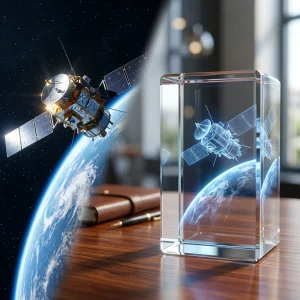
Crystal Glass Laser Engraving
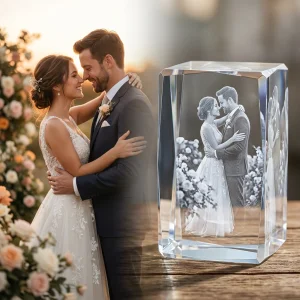
Strengths: High clarity, heavy feel, crisp white surface fracturing or sub-surface 3D engraving.
Weaknesses: Fragile under impact, surface marks produce no color variation, attracts fingerprint smudges.
Best for: Corporate recognition trophies, paperweights, 3D photo glass blocks. Perfect for formal awards, graduations, and executive gifts.
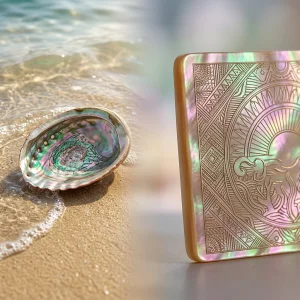
Shell Laser Engraving
Strengths: Iridescent nacre reflects rainbow colors under light, distinctive natural luster on abalone or mother-of-pearl.
Weaknesses: Delicate thin sheets, toxic dust requires sealed extraction systems, low impact strength.
Best for: Custom pendants, inlay guitar picks, compact mirrors, luxury jewelry accents. Designed for fashion enthusiasts and jewelry lovers.
Feathers And Leaves Laser Engraving
Strengths: Unique skeletonized visual details, delicate organic textures, featherweight profile.
Weaknesses: Very fragile, short lifespan if left unsealed, requires low laser power (under 10W) to prevent scorching.
Best for: Framed botanical wall art, custom leaf bookmarks, eco-friendly wedding favors. Best suited for nature lovers who display items behind protective glass.
Craft Comparison Overview
| Craft | Appearance / Texture | Durability | Personalization Depth | Price Range | Production Time | Best-Use Scenarios |
|---|---|---|---|---|---|---|
| Stone Laser Engraving | Matte rock surface with bright white micro-fractured marks | Extreme (Weatherproof, scratch-resistant) | Shallow (0.1mm - 0.3mm micro-spalling) | $15 - $120 | 15 - 45 mins | Outdoor memorials, slate coasters, pet plaques |
| Wooden Laser Engraving | Warm grain with dark charred contrast and deep relief | Moderate (Requires dry environment) | Deep (0.5mm - 2.0mm wood relief) | $20 - $85 | 10 - 30 mins | Cutting boards, recipe plaques, keepsake boxes |
| Crystal Glass Laser Engraving | Transparent glass with frosted white surface fracture | High hardness, high fragility | Surface or internal sub-surface 3D | $30 - $200 | 20 - 60 mins | Executive awards, 3D photo cubes, paperweights |
| Shell Laser Engraving | Iridescent rainbow reflection with glossy nacre finish | Low to Moderate (Thin and brittle) | Very Shallow (0.05mm - 0.15mm) | $25 - $90 | 5 - 20 mins | Pendants, guitar picks, compact mirror caps |
| Feathers And Leaves Laser Engraving | Lacy, skeletonized biological structure | Very Low (Fragile, requires framing) | Surface cut-out / delicate vaporized lines | $15 - $60 | 5 - 15 mins | Framed botanical displays, bookmarks, favors |
Which Craft Should You Choose?
Select Stone Laser Engraving when your design requires photo-realistic contrast, weatherproofing, or long-term permanence on slate or black granite.
Select Wooden Laser Engraving if you want warm tactile depth and natural wood grain on functional kitchen items or personal keepsake boxes.
Select Crystal Glass Laser Engraving for formal awards, retirement gifts, or high-end 3D photo display blocks that catch overhead lighting.
Select Shell Laser Engraving when creating small personal accessories, custom jewelry pieces, or iridescent inlay accents that shift color in natural light.
Select Feathers And Leaves Laser Engraving for delicate, eco-friendly botanical artwork meant to be preserved inside protective glass frames.
How does stone mineralogy laser engraving affect photo quality on slate?
Slate consists of fine-grained metamorphic clay and mica. When hit by a CO2 laser, these micro-minerals flake off cleanly without melting into blobs. This reaction leaves a bright off-white mark against dark grey slate, delivering high-contrast halftone dots that reproduce photograph details accurately.
Can you laser engrave colorful stones?
You can engrave colorful stones like green marble or red granite, but optical contrast will be low. Lasers turn minerals white or dull grey by micro-fracturing them. On lighter or colorful stones, white marks blend into the background, requiring dark paint fills to make designs legible.
Why does high quartz content ruin stone laser engraving?
Quartz expands rapidly when heated above 573°C due to a phase transformation in its crystal lattice. This sudden expansion causes severe thermal shock inside the stone. Instead of creating neat micro-cracks, the laser causes random spalling, jagged surface flaking, and rough edges that destroy fine detail.