Engraving the Earth: How Hazel Turned Her Trek into Permanent Stone Keepsakes
Paper Fades, Plastic Creaks
Hazel stared at the damp pile sitting on her dining table. Her three-week trek through Nepal's Annapurna Circuit ended six days ago, leaving her with a stack of bent bus passes, wrinkled trail permits, and a cracked acrylic keychain bought in Pokhara. The paper was already smudging. The keychain had split along the seam after two days stuffed inside her duffel. Her phone held 2,400 photos of snow-capped peaks and rocky tracks, but those pixels stayed locked behind a black glass screen.
She wanted something real. Heavy. Cold to the touch. Something that matched the raw granite and jagged slate under her boots at 5,416 meters. That search brought her to custom laser engraved stone accessories.
The Physics of Micro-Fracturing Dark Slate
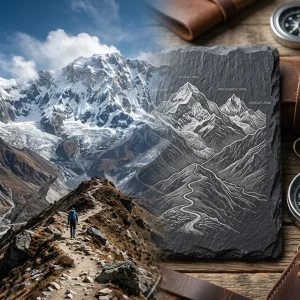
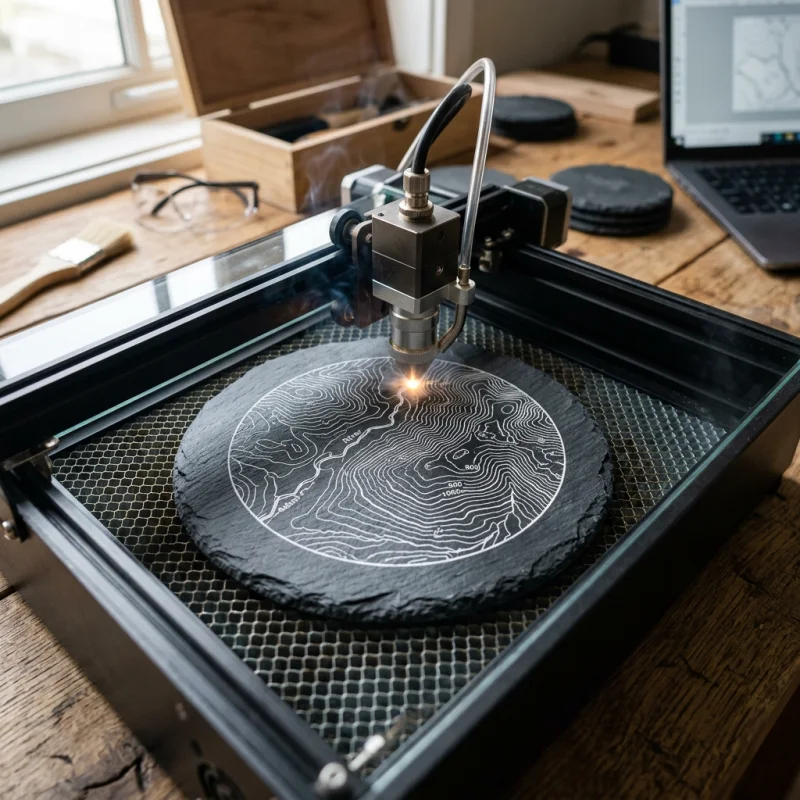
Hazel loaded a four-inch square of dark Welsh slate into her workshop laser bed. Engraving stone isn't like cutting plywood or burning leather. Lasers don't scorch rock; they shock it.
To etch the topographic elevation contours of Thorong La Pass onto slate, precision controls everything. She dialed in her laser engraving slate settings on a 50W CO2 laser tube: 300 DPI raster resolution, 250mm/s travel speed, and 18% power output.
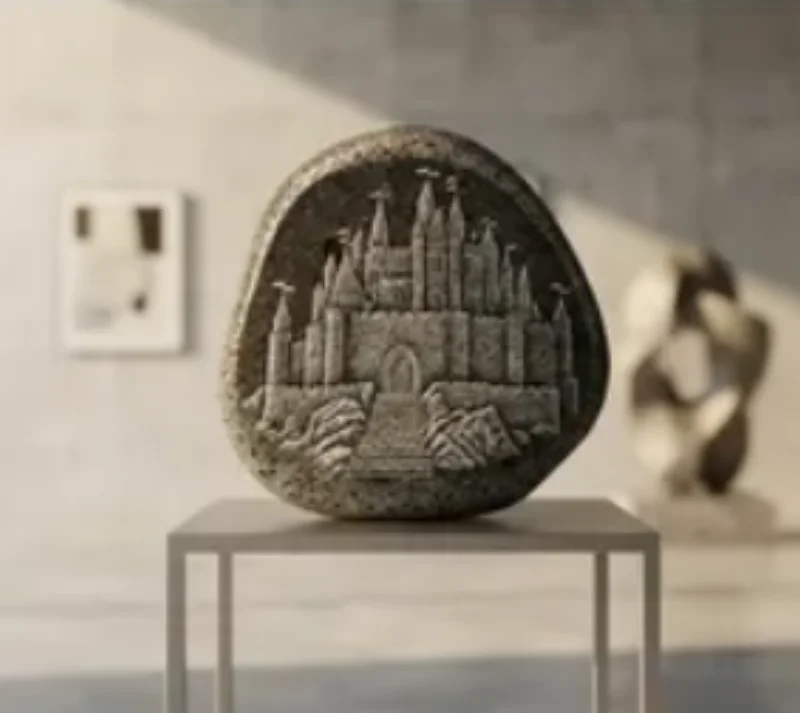
At these parameters, focused light creates controlled thermal micro-fracturing. The beam rapidly heats trace moisture trapped inside the top layer of stone. This micro-explosion pops off microscopic flakes, unmasking a chalky white sub-surface vector map that stands out sharply against the dark gray background. Drop the travel speed below 200mm/s, and excess heat builds stress lines that split the stone coaster down the middle. Push the power too high, and rock glass melts into dull gray slag.
Slate Edges versus Polished Marble
Different rocks react uniquely under the laser beam. Hazel tested three stone varieties to map her travel routes:
- Natural Slate Coasters: Hand-chipped edges give slate pieces a rugged mountain feel. The uneven surface works best with wide topographic lines and vector mountain outlines. Keep font sizes above 10 points and vector line weights at or above 0.75 points so details don't drop into natural surface clefts.
- Polished Marble Bag Charms: Smooth Carrara marble tags allow clean raster resolution down to 4-point typography. Hazel etched precise latitude and longitude coordinates (28.7957° N, 83.9704° E) across a two-inch hexagonal marble tag. White marble doesn't contrast heavily when fractured, so she ran a quick pass of black acrylic paint-fill over the micro-grooves before wiping the polished surface clean.
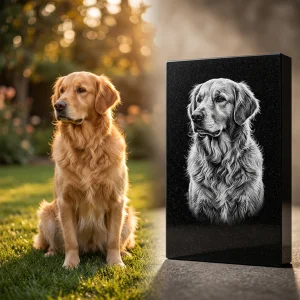
- Granite Display Plaques: Dense black absolute granite offers high contrast without added paint. The laser transforms the dark polished surface into a bright, frosted pearlescent line. Hazel mounted an eight-by-ten inch granite slab etched with her trek's full elevation profile directly above her desk.
Sealing the Contrast Against Moisture
Freshly etched slate looks crisp right out of the machine. Set a dripping glass of iced coffee on an unsealed slate coaster, though, and the white engraving disappears instantly. Liquid fills the micro-fractures, matching the stone's light refraction index and turning white vector lines dark gray until the moisture dries out completely.
Hazel solved this with a two-step finishing method. First, she scrubbed the etched stone under cold tap water using a stiff nylon brush to clear away loose stone dust. Once dry, she sprayed two thin coats of matte acrylic sealer from twelve inches away. The acrylic seals porous fractures against water absorption while preserving the flat, non-reflective feel of raw mountain rock.
Weight Budgets: Backpacking versus Home Display
Stone carries real physical mass. Hazel recognized where stone accessories fit into an adventurer's gear loadout.
A set of four slate map coasters weighs roughly 680 grams. A polished marble luggage tag adds 85 grams to a handle. Hikers counting grams on long-distance trails won't carry heavy stone slabs up a mountain pass. Stone accessories serve best as post-expedition display keepsakes, home bar accents, or heavy-duty key tags attached to urban commuter bags.
Frequently Asked Questions
Will custom laser engraved stone accessories fade or wear off over time?
No. Laser engraving physically alters the stone through micro-fracturing or surface oxidation rather than applying surface ink. The physical mark lasts as long as the stone itself. Applying a clear matte acrylic sealer protects the etched grooves from dirt accumulation and water discoloration.
What are the baseline laser engraving slate settings for a 50W CO2 laser?
Start with a raster speed of 250mm/s, 18% power, and a resolution of 300 DPI. Higher DPI settings re-engrave already fractured stone, creating deep dust pockets that blur line contrast. Lower speeds risk thermal cracking along natural fault lines in the slate.
Why did the engraved white lines turn dark when my slate coaster got wet?
Bare laser-engraved slate relies on tiny air-filled fractures to reflect light as white lines. When water enters those micro-fractures, it replaces the trapped air and alters light refraction, hiding the contrast. Coating the dry piece with a matte acrylic spray seals those microscopic voids permanently.
Can laser engraving shatter slate during processing?
Yes, if thermal buildup is too high. Using excessive power or slow travel speeds traps heat in localized areas, causing thermal expansion that cracks uneven stone slabs. Keeping raster speeds fast and power low prevents stress fractures.