Laser-Engraved Mother-of-Pearl Keepsakes: Turning Cruise Destinations into Lasting Treasures
The Problem with Port Shop Souvenirs
Henry sat at his kitchen table in Ohio, unpacking his luggage after a seven-day cruise through the Western Caribbean. He pulled out a plastic snowglobe from Cozumel and a screen-printed canvas tote from Grand Cayman. The tote smelled of chemical solvent. The snowglobe already had an air bubble trapped near the bottom. It was his tenth wedding anniversary, and these standard port items felt cheap.
His wife, Clara, loved collecting small jewelry items on their trips. A silver pendant here, a pair of pearl studs there. Her dresser was covered in mismatched paper boxes and tangled chains. Henry wanted a gift that held those memories without looking like a clearance rack novelty. He wanted something that captured the white light of the Caribbean water at 18°28'N 77°55'W. His search led him away from mass-produced trinkets toward custom cruise souvenirs made from real marine materials.
Choosing White Nacre and Natural Shell
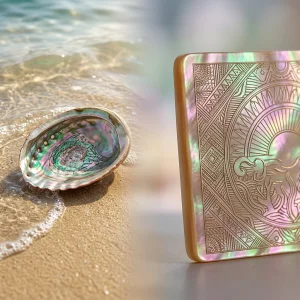
Henry settled on mother-of-pearl, also known as nacre. It's the inner iridescent layer produced by certain mollusks. As light hits the surface, white nacre shifts between pale pinks, icy blues, and soft golds. It felt like ocean water caught in a solid form.
He selected two specific items from a specialty engraver: a dual-sided oval compact mirror wrapped in natural white shell inlay and a square shell travel jewelry box featuring a velvet-lined interior. These personalized shell engraved accessories offered a durable, elegant surface for customization. Converting raw shell into a detailed keepsake requires a very specific production process. Rotary drill bits chip the delicate aragonite layers. Chemical inks flake off within months. Laser technology provides the only clean path forward.

The Science: Low-Wattage 10.6 Micron CO2 Laser Rastering
Engraving natural shell relies on thermal ablation rather than mechanical pressure. Henry provided the engraver with the exact itinerary details: the silhouette of Grand Cayman, the coordinates of Falmouth, and the date of their excursion, March 14, 2024.
Mollusk shell consists of microscopic calcium carbonate plates held together by flexible organic proteins called conchiolin. High-powered industrial lasers or standard fiber units burn the protein binder, leaving char marks and deep cracks. The engraver used a CO2 gas laser tuned to a 10.6-micron wavelength.
At 10.6 microns, calcium carbonate absorbs the light beam instantly at the immediate surface. The machine ran at a low wattage setting, pulling roughly 12 to 15 watts on a 30-watt tube. The laser head swept back and forth in a rastering pattern at 400 millimeters per second. Instead of cutting deep into the material, each pulse vaporized a layer just 0.03 millimeters thick.
This rapid, low-heat pass stripped away the top organic layer without sending shockwaves through the shell matrix. The result was a crisp, frosted white mark that stood out against the shifting background iridescence. The engraver set the resolution to 400 dots per inch. That kept the outline of the island sharp down to tiny coastal coves.
Design Rules for Shell Customization
Getting clean results on natural materials requires clean artwork. Shell tiles feature subtle growth seams, so the graphic layout must adapt to the grain.
- Keep vector lines above 0.5 points: Microscopic font choices blur into the natural streaks of the nacre. Bold sans-serif or crisp serif fonts hold up best.
- Use solid fill silhouettes: High-contrast outlines of islands, compass roses, or nautical coordinates render far better than detailed photographic gradients.
- Position text across flat tiles: Premium shell accessories use mosaic-laid shell tiles. Placing primary dates across flat, center tiles avoids distortion along the natural seam lines.
Material Limitations: Saltwater and Abrasives
Mother-of-pearl rates between 3.5 and 4 on the Mohs hardness scale. It's relatively soft compared to metal or quartz glass. While the laser-rastered mark won't fade or peel, the shell itself needs basic protection.
Never submerge shell keepsakes in ocean water or soapy tap water. Prolonged submersion breaks down the natural glues and conchiolin binders, causing the thin nacre tiles to split or lift from the brass backing. Direct exposure to acidic chemicals like perfume, sunscreen spray, or lemon juice dissolves calcium carbonate on contact, stripping away the shiny polish.
Keep the jewelry box away from loose metal keys or coarse nail files inside a bag. Abrasive friction dulls the polished top layers over time. Cleaning requires nothing more than a quick wipe with a dry, lint-free microfiber cloth.
The Finished Pieces
The finished items arrived two weeks after Henry returned home. The compact mirror felt solid in his hand, cold to the touch at first, catching the afternoon sun through his office window. The laser had etched the thin line of Grand Cayman’s shoreline across the top cover, with their excursion date running along the bottom rim in clean serif type.
Inside the velvet compartment of the matching shell travel box, Henry placed a set of silver sea-glass earrings he had hidden away during the trip. When Clara opened the package that evening, she didn't just see a vanity item. She recognized the exact coast where they'd spent their anniversary morning. The compact mirror stayed in her daily handbag, and the shell jewelry box took a permanent spot on her dresser.
Can laser-engraved mother-of-pearl fade over time?
No. Laser rastering physically ablates the surface layer of the shell, creating a permanent structural change. Unlike silk-screened or printed graphics, the engraved details will not peel, fade, or rub off with daily handling.
Is it safe to take a shell travel jewelry box to the beach?
While the box handles standard travel inside your luggage, keep it away from direct contact with wet sand and ocean water. Saltwater and loose sand particles scrub away the protective finish and weaken the natural adhesive binding the shell tiles.
What file formats work best for custom shell engraving?
High-resolution vector files such as SVG, AI, or EPS deliver the cleanest laser passes. Black-and-white PNG files saved at 300 DPI or higher also render sharp island silhouettes and small typography on mother-of-pearl surfaces.