5 Subsurface Laser Engraved Crystal Keepsakes to Honor Championship Coaches
Winning a championship takes hundreds of practice hours, late-night game tape reviews, and bold play-calling. Standard printed certificates yellow under fluorescent office lights. When a season ends with a trophy lifted high, head coaches and assistant coaches deserve a permanent marker of that achievement.
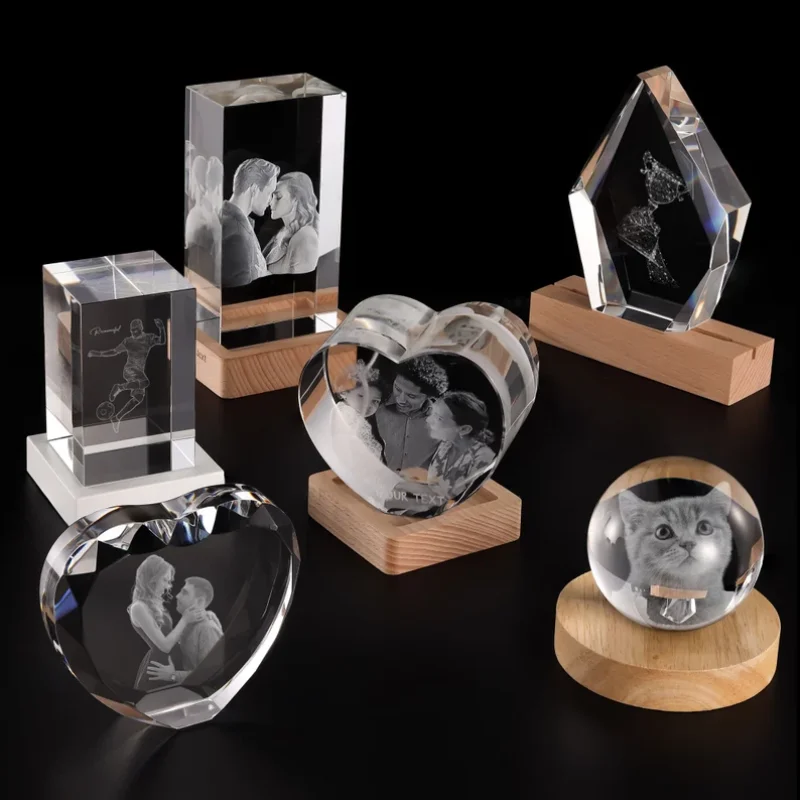
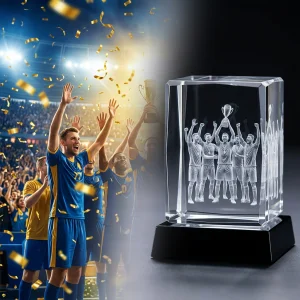
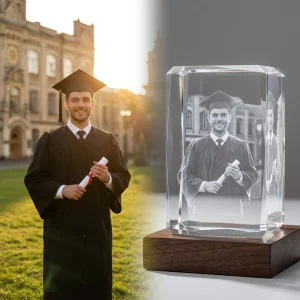
Subsurface laser engraved crystal preserves playbooks, rosters, game dates, and stadium layouts inside solid glass. The surface stays completely smooth while high-precision lasers etch detailed three-dimensional point clouds directly into the optical core. Below are the top custom crystal designs to honor a winning coach, along with the exact technical specs required to make them look sharp.
The Engineering Behind Subsurface Crystal Engraving
To understand why a 3D laser engraved crystal keepsake stands out on a desk, look at how green-spectrum lasers interact with high-purity glass. Craftsmen start with K9 optical crystal. This material offers exceptional clarity, high refractive indices, and zero visible internal bubbles or inclusions. Standard glass contains micro-impurities that shatter under targeted heat. K9 glass lets light pass through until the laser beam hits its exact focal coordinate.
Engravers use a 532nm green laser focused precise millimeters below the polished exterior. The laser energy generates controlled heat micro-explosions within a microscopic spot. These tiny fractures form a point cloud. Top-tier crystal designs pack up to 1,000,000 micro-explosions inside a single crystal block. Higher point density produces crisp vector lines, solid depth, and smooth shading for detailed playbooks or team photos.
Engineers use 2D-to-3D volumetric rendering software to transform flat images into spatial coordinates. The system converts vector artwork of baseballs, basketballs, or stadium blueprints into X, Y, and Z axes. The laser pulsing inside the crystal follows these spatial coordinates, building a floating structural model without ever touching or scratching the outer surface.
1. Beveled Rectangular Blocks for Playbooks and Team Rosters
Rectangular K9 crystal blocks featuring hand-polished bevel edges provide a wide, flat canvas. This format works best for detailed text and complex graphics. Assistant coaches who drew up key set plays or defensive schemes appreciate seeing those exact chalkboards captured permanently.
Best for: Full team rosters, final score breakdowns, and championship play diagrams.
Key Features: Beveled borders catch surrounding room light, framing the internal point cloud. The 50mm to 150mm glass depth gives depth to multi-layered content. You can place the team roster in the back plane and the team logo or final victory score in the front plane for a clear spatial effect.
2. 3D Crystal Sports Globes for Ball and Stadium Vectors
Spherical crystal pieces and integrated ball-on-pedestal designs offer a tactile, dynamic view from every angle. Head coaches who built their entire strategy around a specific sport benefit from a focal piece that mimics the game ball itself.
Best for: Head coaches, program directors, and long-serving coaching staff.
Key Features: Subsurface lasers etch standard seam details of baseballs or panel grooves of basketballs right into the center of the sphere. Volumetric rendering allows the internal ball to spin visually as you walk past the desk. Adding a tiny replica of your home stadium blueprint beneath the ball adds clear historical context.
3. LED Light-Base Illuminated Crystal Pedestals
Ambient room light isn't always enough to make dense point clouds pop, especially on dark wooden bookshelves or inside trophy cases. Light-base pedestals solve this visibility issue by casting direct illumination upward through the bottom face of the glass.
Best for: Dimly lit offices, executive desks, and display cabinets.
Key Features: Fitted bases house soft-white LED diodes focused upward. The light hits the internal micro-fractures, illuminating every dot in the 1-million-point cloud. White LEDs highlight structural details without distorting the natural color spectrum of the optical glass.
Avoiding Engraving Errors: Photo Quality and Glass Clarity
Not all digital files produce clean interior engravings. Smartphone photos taken in dark gymnasiums or low-lit fields present major hurdles. Compression artifacts and digital noise turn into pixelated cluster spots inside the crystal.
- Pixelated Point Clouds: Low-resolution uploads lack distinct contrast boundaries. The rendering software translates digital noise into stray micro-explosions, creating a foggy haze around your team's championship photo.
- Glass Inclusions: Lower-grade glass blanks contain iron deposits and tiny air pockets. When a 532nm laser hits an unexpected inclusion, it refracts wildly, creating an unwanted crack across the central engraving zone. Always insist on premium K9 optical glass.
- Overcrowded Artwork: Squeezing 50 player names, a full playbook diagram, and a stadium map into a small 50mm block results in unreadable text. Keep elements spaced out properly across the available depth.
Technical Specifications and Care Protocol
Use these exact parameters when preparing files for custom coach appreciation gift ideas:
- Photo Resolution: Minimum 300 DPI at 100% scale. Vector files (.AI, .EPS, or clean .SVG) work best for playbooks, logos, and rosters.
- Font Size and Depth Rules: For crystal depths between 50mm and 100mm, keep sans-serif typography at 8pt or larger. For deeper 150mm blocks, 10pt minimum font ensures legibility through double-refraction angles.
- Line Thickness: Set play diagram lines to at least 0.5pt to prevent the laser from skipping micro-crack points along continuous paths.
Maintaining high-grade K9 glass requires simple, deliberate care. Dust surfaces with a clean microfiber cloth. Avoid ammonia-based cleaners or abrasive pads that scratch anti-reflective exterior finishes. Spray a 50/50 mix of distilled water and isopropyl alcohol onto a microfiber towel, then wipe the outer facets to remove fingerprints.
How do I convert a handwritten playbook diagram into a 3D laser engraved crystal keepsake?
Scan the original play diagram at 600 DPI using a flatbed scanner. Save the scan as a high-contrast file. Designers convert the chalk lines into clean vector paths and run the artwork through volumetric rendering software to suspend the diagram at a set depth inside the optical crystal block.
Will the laser engraving inside the crystal fade or degrade over time?
No. Subsurface laser engraving permanently changes the molecular structure inside the K9 optical crystal by creating physical micro-fractures. Sunlight, temperature shifts, and ambient air cannot access or degrade the micro-explosions sealed inside the glass block.
What size crystal block works best for a championship team roster with 30+ names?
Choose a block at least 100mm to 150mm wide. This size allows clear 8pt or 10pt sans-serif text layout with sufficient margin space. Smaller 50mm crystals become overcrowded, making player names difficult to read.