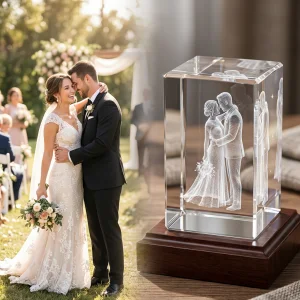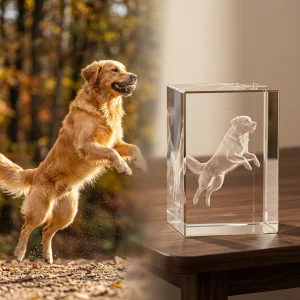
From Mid-Air Fetch to Frozen Light: How Hugo Preserved Buster’s Best Moment in K9 Crystal
A Fading Photo on a Glowing Screen
Hugo sat at his kitchen table at 11:00 PM, scrolling through four years of camera roll backups. His golden retriever, Buster, had just turned seven. Last autumn, Hugo caught a rare shot: Buster mid-stride across a sunlit field, catching a red canvas dummy two feet off the ground. Mud flew from his paws. Ears flew back. Light caught every hair on his neck.
Hugo printed it once on glossy paper. Sun bleached the colors after nine months on his desk. He tried a cheap acrylic block from an online vendor. Within a year, the plastic shifted to a dull yellow hue, scratched up from routine dusting. Paper tore. Acrylic degraded. Hugo wanted a physical object with real weight, something that captured the kinetic energy of that afternoon without fading under indoor lighting.
Selecting the Photo: Focus, Contrast, and Resolution
Converting a dynamic snapshot into a solid 3D structure starts with raw visual data. Hugo learned quickly that not every phone photo works.
- Resolution threshold: The source file needs a native resolution of at least 300 DPI at the target output size. A compressed 72 DPI image pulled from social media lacks the pixel grid required for CAD mapping.
- Edge separation: High visual contrast between the pet's coat and the background makes clean subject extraction possible. Buster's golden fur stood out sharply against the deep green tree line behind him. Dark dogs against black dog beds or white poodles on pale snow create soft edges that confuse conversion algorithms.
- Motion blur limits: Crisp shutter speeds matter. While subtle tail blur adds motion context, blurry eyes or muzzled noses break the point cloud renderer. The software needs sharp facial landmarks—nose texture, eye reflections, ear folds—to build depth accurately.
Hugo picked the raw 12-megapixel file taken at 1/1000s shutter speed. The contrast was sharp. Fur boundaries were clear.
Inside the Machine: Sub-Surface Laser Engraving
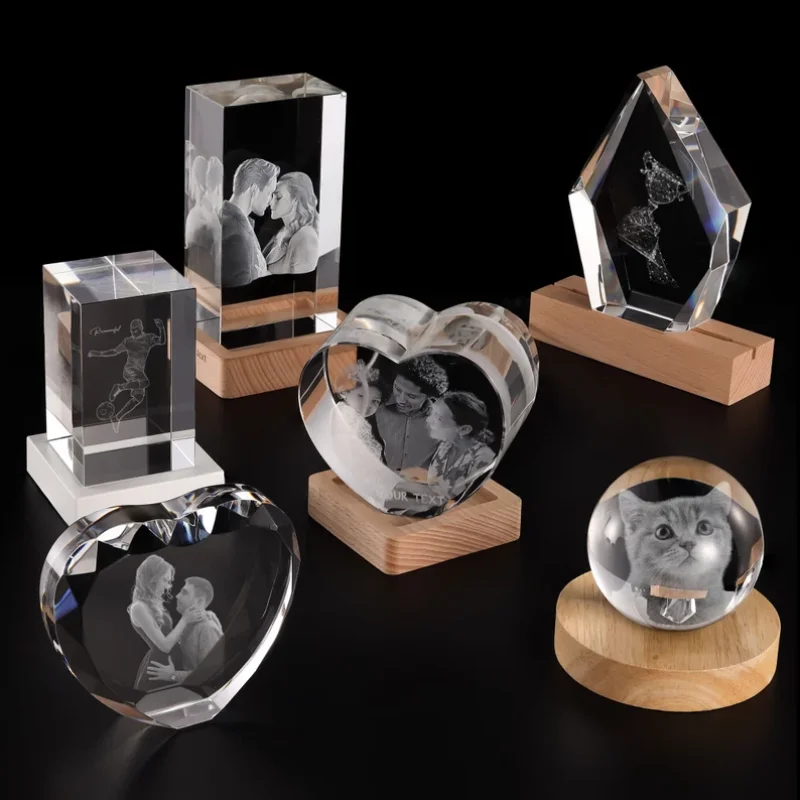
Hugo uploaded his photo and selected a 3D pet crystal block option. Behind the scenes, optical technicians converted his two-dimensional photo into a 180-degree volumetric model.
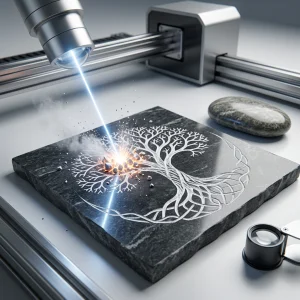
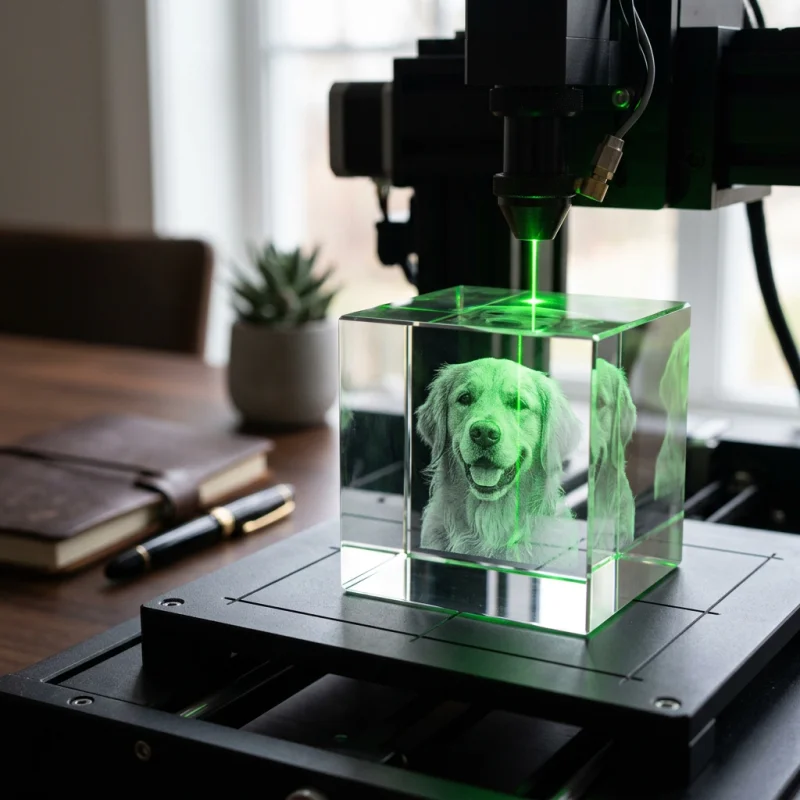
Sub-surface laser engraving (SSLE) relies on precision optics. The equipment uses a 532-nanometer green diode laser focused through specialized lenses. Standard surface lasers etch outer layers by heat ablation. SSLE works differently. The 532nm green laser light passes directly through the clear outer layers of optical glass without leaving a mark on the surface.
When the light hits the exact focal point inside the block, localized energy density spikes. This creates controlled thermal stress, causing a micro-fracture under 100 microns in size. The machine repeats this process up to one million times per block. Each micro-fracture reflects light like a tiny white dot. Thousands of these points combine to form Buster’s image inside solid glass. The exterior remains completely smooth to the touch.
Material Science: Why K9 Optical Crystal Wins
Hugo spent days researching materials before placing his order. Cheap custom gifts often rely on cast acrylic or standard float glass. The differences show up quickly over time.
A high-grade K9 optical crystal pet gift uses low-lead borosilicate material refined for optical prisms and camera lenses. It handles high-intensity laser energy without structural cracking along stress lines. Cheap glass contains microscopic air bubbles that rupture when struck by a 532nm laser, ruining internal details.
K9 crystal offers an optical purity index that eliminates the murky green tint found in standard float glass windows. It doesn't yellow under sunlight like acrylic, maintaining crystal clarity over decades. With a Mohs hardness rating of 6.5, it resists fine surface scratches during weekly cleaning.
2D Etching vs. 180-Degree 3D Conversion
During checkout, Hugo chose between flat surface etching and full 180-degree depth. A flat 2D render etches the photo onto a single plane inside the block, like a floating paper photograph.
The 180-degree 3D depth option uses CAD software to model the subject’s physical volume. Artists stretch the facial topography forward and push the neck and ears backward. When Hugo looks at his block from the side, he sees the realistic curvature of Buster’s snout, the curve of his chest, and the depth of his paws extending into space.
Lighting and Maintenance for Long-Term Display
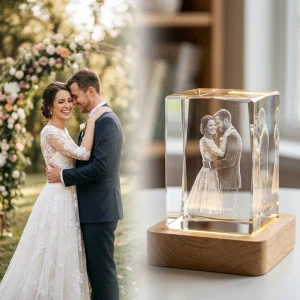
When the package arrived, Hugo set the block on his side table. Glass on its own requires external illumination to show internal micro-fractures clearly.
Hugo paired the block with an illuminated wood base. Warm white light (3000K) brings out golden, brown, and tan coats, giving fur a rich tone. Cool white light (6000K) works best for silver, white, or black coats, accentuating sharp contrasts. Hugo picked 3000K for Buster's warm coat.
Fingerprint oils reduce glass clarity instantly. Hugo cleans the outer surface with pure water mixed with a single drop of clear dish soap, drying it immediately with a clean lint-free microfiber cloth. He avoids paper towels because coarse wood pulp fibers leave microscopic scratches on polished surfaces.
Now, when morning light hits the table, Buster’s mid-air leap catches the sun, suspended inside clear, solid crystal.
Can any smartphone photo be converted into a 3D pet crystal block?
Most modern smartphone photos work well if they are clear and taken in bright light. However, photos with severe motion blur, low lighting, heavy compression, or low resolution (under 300 DPI) can't be expanded into accurate 3D point clouds. Sharp focus on your pet's eyes and fur is essential for clean depth modeling.
What is the difference between a 2D surface etch and a 180-degree 3D crystal conversion?
A 2D etch places a flat photo inside the crystal along a single focal plane. A 180-degree 3D conversion uses specialized CAD software to build a volumetric model of your pet's head and body. This creates physical depth, allowing you to view your pet from the front and side angles with realistic contours.
How do you properly clean a K9 optical crystal pet gift without scratching the glass?
Use a clean, lint-free microfiber cloth designed for optical lenses. Apply a small amount of glass cleaner or mild dish soap diluted in water. Avoid paper towels, abrasive sponges, or bath towels, as coarse fibers cause micro-scratches on the crystal surface over time.