Crafting a Forever Tribute: Hazel’s Guide to Laser Engraved Pet Memorial Stones
Hazel stood in her damp backyard holding a shattered piece of painted resin. Last spring, she bought a cheap garden plaque online for her patio garden. Twelve months of Ohio weather reduced it to flaking paint and hollow plastic chunks. When her 14-year-old rescue mutt, Barnaby, died in late November, she refused to repeat that mistake. She needed a real pet memorial stone. It had to sit under the hydrangeas where Barnaby napped, surviving sub-zero frost and blazing August sun without fading.
Mass-produced cast stone and synthetic resins break down quickly outdoors. Moisture creeps into microscopic air pockets, freezes, and pops the surface off. True natural stone handles climate swings effortlessly when you choose the correct geological slab and etching method.
Selecting the Right Natural Stone
Hazel spent three weeks researching stone materials before buying Barnaby's tribute. Natural rock varies drastically in density, quartz content, and water absorption rates.
Here is how the top stone choices compare for laser engraved pet memorials:
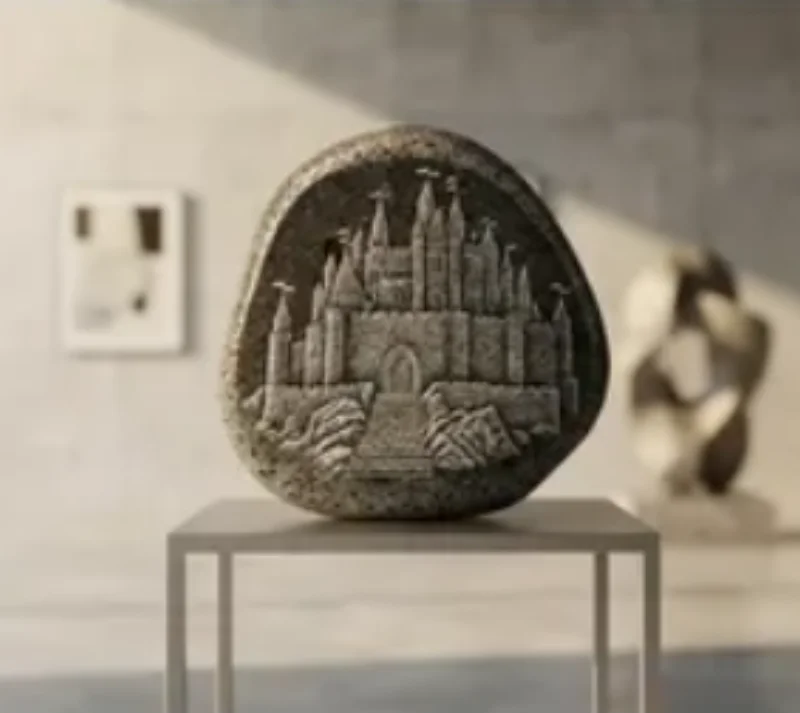
- Absolute Black Granite: The highest-density choice available. Fine, uniform grain structure gives granite extreme durability. When a focused laser beam hits dark granite, it shatters microscopic quartz particles on the surface. Black rock turns bright, chalky white, producing crisp photo contrast. It absorbs almost zero water, resisting frost heaves for decades.
- Polished Basalt: Igneous rock formed from cooled lava. It features a dark gray tone and smooth texture. Basalt engraves cleanly, but photo contrast is softer than black granite. It withstands moisture well.
- Natural Slate: Layered stone with a distinct, rustic surface. Slate accepts high-detail laser work, making it popular for indoor desk plaques or covered porch displays. Out in an open garden bed, its natural fissures absorb standing rainwater and spall during harsh freeze-thaw cycles.
Avoid sandstone, limestone, and porous river rock for unprotected yard placement. Sandstone acts like a stiff sponge, sucking up groundwater during autumn rains. Once winter drops temperatures below 32°F, trapped water expands by 9 percent, cracking the stone from the inside out.
The Science of Photo-Etching on Rock
Hazel wanted Barnaby’s crooked-eared smile engraved accurately, not rendered as a muddy gray blob. Photo reproduction on hard surfaces requires precise machinery settings.
Laser technicians use CO2 laser engravers operating between 40W and 60W power for natural stone. High-power industrial metal cutters melt stone surfaces into glass-like globs. A 50-watt CO2 laser delivers controlled thermal shock, chipping away micro-fissures without scorching surrounding rock.
Image preparation matters as much as laser wattage. The engraver imports a high-resolution portrait and processes it through a Jarvis dithering algorithm at 300 to 500 DPI (dots per inch). Dithering breaks continuous grayscale photos into thousands of distinct white micro-dots. Jarvis dithering calculates spatial error across adjacent pixels. This keeps dark fur textures from clumping into solid black holes while preserving bright highlights in the eyes.
Etching at 300 DPI offers optimal detail on fine-grained granite. Pushing resolution above 600 DPI places dot burns too close together, causing adjacent stone chips to overlap and break away, ruining fine details.
Post-Processing for All-Weather Endurance
Raw laser micro-fractures appear bright white when dry. However, rainwater dampens raw stone, filling tiny etching pits and temporarily darkening the image until the surface dries out fully. Hazel wanted Barnaby’s portrait visible even during heavy rainstorms.
The solution lies in post-processing sealants. After laser etching, technicians clean the stone slab with denatured alcohol to remove fine dust. They apply a thin coat of exterior-grade, UV-resistant clear acrylic sealant across the engraved area.
This transparent acrylic layer serves two purposes. First, it prevents water from soaking into microscopic glass fractures, keeping the etched image bright white through downpours. Second, it creates a slick barrier that stops airborne spores, moss, and lichens from taking root inside the engraving grooves.
Placement and Long-Term Maintenance
Hazel received Barnaby’s finished 12x12-inch black granite slab in mid-December. She prepared a dedicated outdoor resting spot using coarse sandbox sand and pea gravel.
Placing a heavy pet memorial stone directly on bare soil invites settling and staining—soil traps moisture beneath the slab and splashes dirt across the face during downpours. Setting the slab on a 2-inch crushed rock base ensures rainwater drains away immediately.
Maintaining etched granite takes minimal labor. Every spring, Hazel cleans the stone using warm water, a drop of neutral dish soap, and a soft microfiber cloth. Avoid these damaging chemicals:
- Muriatic acid or brick cleaners, which dissolve acrylic sealers instantly.
- Bleach, which leaves salt residues behind in fine crevices.
- Wire brushes or steel wool, which scratch polished black granite surfaces.
Which stone material lasts longest outdoors for pet memorial stones?
Absolute Black granite lasts the longest in outdoor environments. Its high density and low porosity prevent water absorption, protecting the slab from cracking during freeze-thaw winter weather. Laser micro-fractures on dark granite retain crisp white contrast indefinitely without fading under UV sunlight.
Can you etch a clear photograph onto a slate pet memorial stone?
Yes, laser engravers etch clear photographs onto slate using dithering algorithms at 300 to 400 DPI. Slate yields sharp, high-contrast imagery when dry. For long-term outdoor longevity, slate should be kept under cover or sealed with outdoor acrylic glaze to prevent weather-related flaking.
Do laser engraved pet memorials require maintenance?
Minimal maintenance is required. Rinse the stone once a year with clean water and mild dish soap to remove pollen, dirt, or fallen leaves. Reapplying an outdoor clear acrylic sealant every three to five years helps maintain high photo contrast during heavy rainstorms.