7 Pet Memorial Garden Stones Engraved to Preserve Favorite Backyard Play Memories
Leo stood in his damp back garden looking at a cracked slab of painted resin. Last autumn, he buried his dog’s favorite squeaky tennis ball beneath the big white oak. He placed a cheap store-bought marker over the spot. Winter arrived quickly. Frost trapped moisture inside the hollow resin shell, freezing and expanding until the face split into four jagged pieces. By March, the printed lettering had flaked away completely.
Buster had spent twelve years turning that section of yard into his personal speed track. He caught tennis balls mid-air, dug near the fence line, and slept under the warm afternoon sun. Leo wanted a permanent outdoor marker that could handle ten years of ice, heavy rain, and lawnmowers without fading or shattering. He decided to build a custom tribute using high-density laser engraved pet stones crafted from hard natural rock.

Geology Matters: Basalt and Granite vs. Soft Sandstone
Leo started his project by researching raw stone materials. Not all rock survives freezing temperatures outdoors. Porous rocks like sandstone absorb ground water easily. When winter temperatures drop below 32°F (0°C), trapped water expands by 9%, fracturing the stone from the inside out. Soft limestone fares even worse. Rainwater carries mild carbonic acid that dissolves calcium carbonate over time, turning sharp engravings into chalky smudges within two seasons.
For permanent outdoor placement, Leo focused on dense igneous and metamorphic rocks:
- Absolute Black Granite: Formed deep underground under intense heat and pressure. It features near-zero water absorption (below 0.05%) and provides a jet-black background that contrasts sharply when etched.
- Dense Basalt: A fine-grained volcanic rock that resists surface spalling and holds crisp vector lines through harsh freeze-thaw cycles.
- Glacial River Cobbles: Tumbled smooth by rivers over thousands of years, these rocks possess high quartz density and natural shapes that blend into garden beds.
Converting Playtime Photos into Laser-Ready Vector Art
Leo picked his favorite photo of Buster mid-bound, catching a red canvas dummy against the green garden shed. Raw camera photos don't etch cleanly onto dark stone without preparation. Shadows blur together, and dark background grass clutters the image focus.
Leo opened his image software and cropped out the shed background entirely. He bumped up contrast by 35% to isolate Buster’s silhouette, open jaw, and flopping ears. Next, he converted the grayscale photo to a 1-bit bitmap using Jarvis dithering at 300 DPI. This process converted gray fur tones into tight micro-dots that the laser could read. For text and paw prints, he traced clean vector paths with smooth node curves to prevent jittery lines on the stone surface.
Laser Settings and Acrylic Litho-Ink Fill
Desktop diode lasers lack the power needed to etch dense stone cleanly. Leo used a 60W CO2 laser engraver with a 2-inch focal lens set directly to the stone's upper plane.
He dialed in these exact technical parameters for raster engraving rock:
- Laser Power: 60W CO2 tube operating at 45% power output.
- Speed: 350 mm/s.
- Raster Resolution: 300 to 500 DPI. Setting resolution higher than 500 DPI overlaps the laser pulses, micro-shattering the surface into rough glass slag that flakes off later.
- Pass Count: Single pass raster.
When the CO2 laser beam strikes dark granite or basalt, intense thermal shock micro-fractures the quartz crystals, creating a light-grey mark. Rain turns these raw micro-fractures dark, making the image disappear when wet. Leo solved this problem with a litho-ink masking technique. He applied painter's tape across the stone face before laser cutting through it. Immediately after engraving, he sprayed two thin coats of white acrylic litho-ink directly into the exposed rock grooves. Once dry, he peeled the tape away. The bright white acrylic stayed locked inside the etched grooves, keeping the design visible in pouring rain.

7 Laser Engraved Pet Stones for Backyard Memories
Leo designed seven unique markers to place around Buster’s favorite backyard haunts. These pet memorial rock ideas mix functional stone choices with custom artwork.
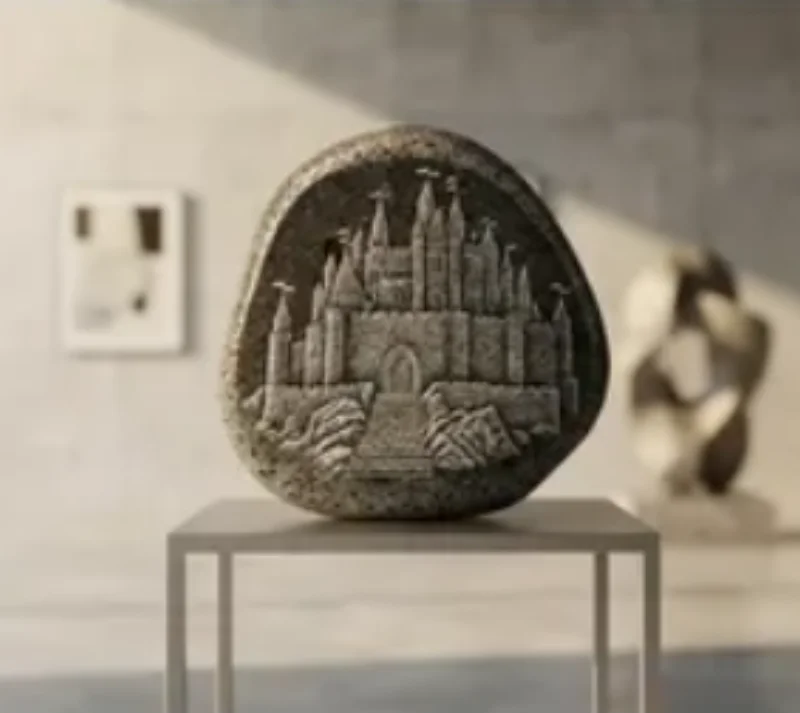
1. The Polished Granite Action Slab: A 12x6-inch Absolute Black Granite marker set at the base of the oak tree. It features the photo-dithered vector image of Buster catching his ball, complete with his name and birth years etched deep into the stone.
2. The Basalt Fetch Zone Marker: A flat, dark basalt stone placed near the back fence line where Buster always waited for the ball to land. Engraved with a high-contrast vector graphic of a tennis ball breaking through water droplets.
3. Glacial Cobble Sunbathing Rock: A smooth 8-inch river rock positioned in the center of the patio flowerbed where the afternoon sun hits hardest. Etched with a simple outline of a sleeping retriever and filled with gold litho-ink.
4. Dark River Stone Paw Pathway Marker: A heavy, oval river cobble featuring Buster’s actual front paw print. Leo digitized the ink print taken by his vet, converted it to clean vector fills, and rastered it at 400 DPI.
5. Beveled Edged Granite Garden Border Block: A thick granite block with chiseled edges that locks directly into the garden edging. It houses Buster's favorite catchphrase: "Always Ready for One More Throw."
6. Tumbled Basalt Stepping Stone: A thick 10-inch volcanic stone set flat into the lawn along Buster's worn sprint path. The deep laser engraving withstands foot traffic and lawnmower tires without wearing down.
7. Angled Granite Wedge Memorial: A heavy black granite wedge cut at a 45-degree angle. Placed near the back porch stairs, the sloped face keeps rain from pooling over the engraved lettering and makes it easy to read while walking past.
Installing the Stone for Decades of Weather Resistance
Leo dug a seven-inch deep hole under the white oak tree. He dumped three inches of crushed gravel into the base, followed by two inches of coarse sand, tamping the layers down with a hand tamper. Settling stone directly onto wet topsoil causes mud to creep over the stone edges during spring rains.
He set the 12x6-inch black granite slab flush with the top of the turf. Lawn mower blades now slide right over the stone without hitting the edges or dulling the steel blades. The crushed gravel sub-base lets groundwater drain away instantly, stopping frost from pushing the stone out of alignment during sub-zero nights.
Can I leave laser engraved pet stones outside during freezing winters?
Yes, as long as you select non-porous stones like Absolute Black Granite, dense basalt, or smooth river cobbles. These stones have water absorption rates below 0.05%, preventing moisture from seeping inside and freezing. Avoid soft limestone or porous sandstone, which crack when trapped water expands into ice.
Why does my engraved stone design disappear when it rains?
Unfilled laser etchings rely on fractured quartz crystals to reflect light and create contrast. When rainwater hits raw micro-fractures, it fills the microscopic gaps and temporarily darkens the stone back to its original shade. Applying an exterior white acrylic litho-ink fill inside the engraved areas keeps the design high-contrast and readable in wet weather.
What laser power is required to etch dark granite or basalt river rock?
A CO2 laser tube rated at 50 Watts or higher is required to etch hard stones efficiently. Set raster resolution between 300 and 500 DPI with speeds around 300 to 350 mm/s. Fiber lasers also work well on granite, but lower-power diode lasers under 20W generally lack the thermal power to micro-fracture rock surfaces cleanly.