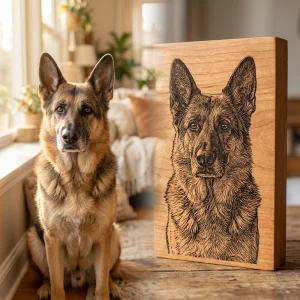
How Laser Engraved Wooden Keepsakes Bring Peace to Grieving Dog Owners
Henry stared at the empty floor space near the back door where Buster’s oversized water bowl used to sit. The floor tiles looked clean, sterile, and wrong. Buster, an eleven-year-old German Shepherd mix with graying muzzle fur, had passed away six days ago. The silence throughout the house felt heavy. Henry spent two straight evenings scrolling through online listings searching for a way to mark Buster's life. Everything looked cheap. Printed cardboard frames faded under indoor lights. Faux-stone resin plaques felt light, hollow, and disposable. He wanted weight. He wanted warmth.
Finding Meaning in Natural Hardwood Keepsakes
A solid wooden memorial offers a physical anchor during fresh grief. Unlike synthetic resins or stamped metals, natural timber carries an organic grain pattern. No two wooden blocks match. Henry found himself drawn to solid wood urns, Rainbow Bridge wall plaques, and thick desktop photo blocks.
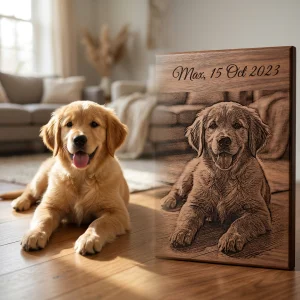
Selecting a personalized pet loss keepsake requires balancing visual style with material durability. Custom cremation urns feature hidden slide-out bottom panels sealed with brass screws. Desktop photo blocks stand upright without plastic kickstands. Wall plaques come equipped with recessed keyhole slots for flush mounting. Henry picked a heavy desktop photo block carved from American cherry.
Selecting the Right Hardwood: Dark Walnut vs. Warm Cherry
Wood species dictate how an engraving looks under natural room light. Dark walnut provides a rich chocolate background. Its dense cell structure holds crisp line work, creating dark carbon contrast when laser-fired. The dark tone works exceptionally well for portraits where light fur stands out against a deep background.
Warm cherry offers a smooth, tight grain with golden-red undertones. When heat touches cherry wood, the burned sections turn a deep charcoal brown against a honey background. Cherry naturally darkens as it ages, deepening its tone over the years when placed on a desk or mantle.
Avoid softwoods like pine, fir, or white cedar for photo engraving. Soft pine contains uneven growth rings and heavy pockets of sticky sap. When a high-heat laser hits resin-rich pine, the sap boils, bleeds across the timber, and smudges fine details. The result is blurry fur lines and patchy dark scorch marks. Dense hardwoods like cherry, walnut, or maple produce clean, crisp burns every time.
The Technical Precision Behind Wood Photo Engraving
Crisp details on wood do not happen by chance. High-end woodworkers use 40W CO2 lasers set precisely at 300 DPI (dots per inch) to burn vector images into dense hardwood surface fibers.
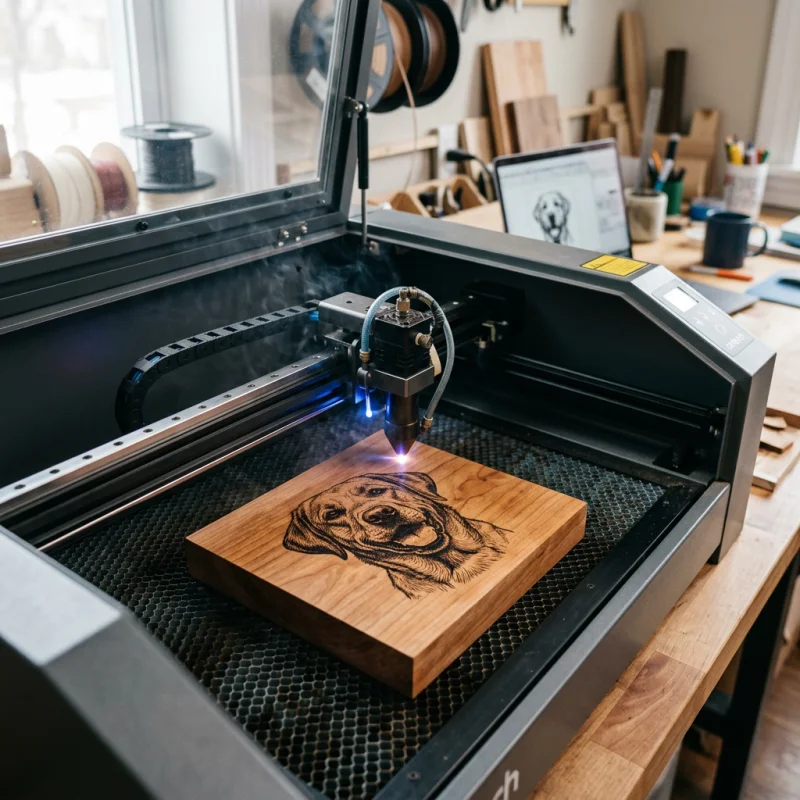
Before the laser touches the timber, digital technicians process the original photograph. They don't just convert a photo to black and white. They run grayscale pre-processing parameters designed for wood density. Technicians isolate the dog from the image, erase distracting background clutter, boost mid-tone contrast, and apply error-diffusion dithering. This process breaks dark fur gradients into thousands of tiny, precise burn dots. Without dithering, dark coat strands melt into a solid black scorch mark that hides your pet's face.
Choosing the Perfect Photo for Engraving
Henry opened his phone photo library. He had over 3,000 pictures of Buster, but most were taken in dim living room light or caught Buster mid-motion as a blurry mass. Laser burning requires bright, crisp source photos to etch individual whiskers and coat textures clearly.
Follow these quick rules when picking your photo:
- Select images shot in bright daylight or well-lit outdoor spaces.
- Check that the camera focused sharply on your dog's eyes and wet nose.
- Avoid cropped smartphone screenshots or low-resolution images saved from social media apps.
- Pick photos showing clear contrast between your dog's coat color and their background.
Selecting Inscription Text and Readable Fonts
Inscriptions ground an engraved portrait with facts and feeling. Henry chose Buster's full name, his birth and passing years, and a short line etched along the bottom edge: "Best Boy Always."
Font choice impacts legibility on textured wood grain. Ultra-thin script fonts tend to disappear into dark walnut or rich cherry lines. Massive block fonts look clumsy. Medium-weight serif fonts like Garamond or Baskerville balance classic beauty with razor-sharp laser lines. Clean script fonts with generous letter-spacing prevent burned carbon ink-bleed effects along small letters.
A Permanent Place on the Desk
Five days after ordering, a rectangular parcel arrived at Henry's porch. He peeled back the protective bubble wrap. Inside sat the solid cherry block, smelling faintly of sweet hardwood smoke and natural oil finish.
Henry ran his thumb over the engraved wood surface. He felt the light texture carved into the timber where Buster’s flop-ears were etched. The high-contrast burn caught the afternoon sunlight pouring through the windowpane. The heavy block stood firmly on his desk, replacing an empty space with something real, grounded, and permanent. Holding a solid laser engraved dog memorial gave Henry a quiet moment of comfort he could touch every single day.
How long do laser engraved wooden pet memorials last?
Hardwood memorials made from walnut, cherry, or maple last indefinitely when kept indoors away from direct, unshielded rain. Hand-applied oil coatings protect the timber from indoor humidity fluctuations, while laser-carved burns won't fade, peel, or rub off over time.
Can you engrave a memorial photo from an old physical print?
Yes. You can scan physical paper photographs using a standard flatbed scanner at 600 DPI or higher. Digital technicians can clean up faint dust spots, scratch marks, and low contrast before passing the digital file to the laser processor.
How do I clean and care for a custom wooden pet memorial?
Wipe the wooden surface gently using a dry microfiber cloth. Avoid spraying aerosol chemical cleaners or soaking the timber in water. Apply a thin coat of mineral oil or natural beeswax polish once a year to preserve the wood's natural glow.